% of technologists that received a pay rise in the last 12 months
45%
% of technologists that now receive additional monetary compensation beyond base salary
58%
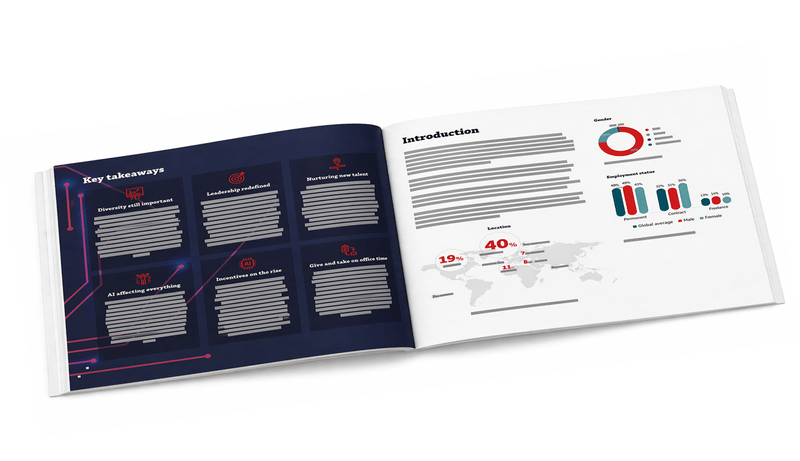
Based on insights from 3,600+ technologists across 53 countries, the Harvey Nash Tech Talent & Salary Report 2026 explores how pay is shifting, what technologists value most at work, and how AI is reshaping careers, leadership and skills demand. Whether you're a technologist benchmarking your salary, a digital leader building teams, or an HR or talent professional tasked with attracting tech talent, this report gives you the data you need to make confident decisions.
In this year’s report, you’ll discover:
|
|
The past year has been filled with noise around tech - from layoffs and economic uncertainty to predictions about artificial intelligence replacing jobs. But when you look beyond the headlines, a more balanced picture emerges.
Our research shows a global tech workforce that is settling rather than stalling. Demand for skills remains strong, salaries continue to rise for many, and technologists are adapting -upskilling, rethinking career paths and becoming more selective about where and how they work.
At the same time, employers face mounting pressure: skills shortages persist, workloads remain high, and retaining experienced technologists is becoming harder. Understanding what’s really happening in the market has never been more important.

The Harvey Nash Tech Talent & Salary Report 2026 represents the opinions and views of thousands of permanent, contract and freelance technologists from across the globe.





Technology remains one of the best paid career paths globally - but pay satisfaction is increasingly nuanced.
Almost half of technologists (45%) received a pay rise in the last 12 months, and expectations remain positive with 47% anticipating another increase in the year ahead. Career progression is also evident with 21% receiving a promotion, although promotion does not always guarantee a pay uplift. The composition of reward is changing too: 58% now receive additional monetary compensation beyond base salary, such as bonuses or incentives. However rising workloads, inflationary pressures and higher expectations mean pay alone is no longer enough to guarantee satisfaction or loyalty.
Download the report to benchmark salaries by role, sector and employment type.
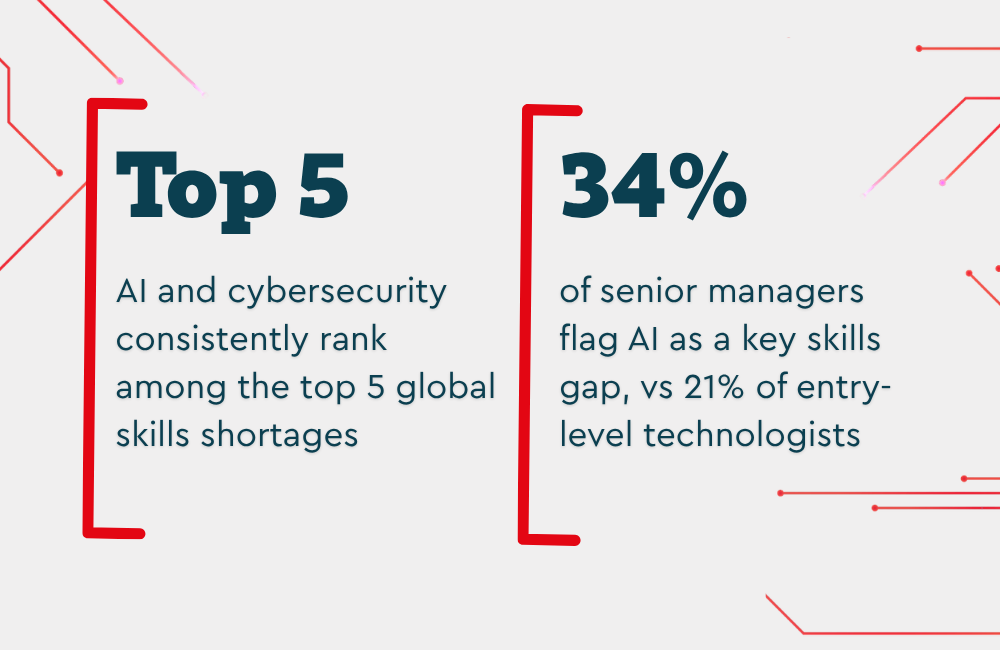
Skills shortages remain a defining feature of the tech labour market in 2026. AI and cybersecurity continue to rank consistently among the top five skills shortages worldwide. Perceptions vary by seniority, however: 34% of senior managers identify AI as a critical capability gap, compared with just 21% of entry level technologists. Demand for software engineering, cloud and platform expertise remains high across sectors, reinforcing the ongoing challenge organisations face in securing experienced technical talent.
For employers, this means competition for experienced talent remains intense, even as candidate behaviour becomes more cautious.
AI is now embedded in day-to-day working life for most technologists, with 75% reporting access to AI tools at work. While access to AI tools is widespread, structured upskilling is not and clear strategy are lagging, creating both risk and opportunity for employers who get it right. When it comes to the threat of AI, while 22% believe it will perform more than half of their role within the next five years, concern is generally measured rather than alarmist, with around four in ten saying their role feels under threat. Most are focused on how AI can augment their skills, productivity and career prospects, while those working most closely with AI are often the most realistic about its potential impact. Preparation, however, remains uneven: only 36% say their organisation is actively upskilling for AI, and one in five report that their organisation still lacks a clear AI strategy. AI isn’t replacing technologists - but it is redefining what makes them valuable.
Flexible working has become a strong expectation among technologists, with 52% considering hybrid working very important when evaluating roles. For many, flexibility has become as valuable as pay, with 41% willing to accept a lower salary in exchange for greater workfromhome options. Encouragingly, employee preference and employer policies appear to be slowly converging. But at the same time, pressure has not eased: 53% report increased workloads even where team sizes are stabilising, and just 40% feel well supported in maintaining work–life balance. When it comes to support for wellbeing, this varies widely by sector and organisations with 19% saying their organisation is unsupportive of employees’ mental health.
For leaders, the challenge is no longer whether to offer flexibility - but how to balance productivity, collaboration, wellbeing and sustainable performance. Download the report to explore what matters most to technologists today.
How important is hybrid working to you?
Although 55% of technologists say they are currently happy in their role, mobility remains high, with 40% planning to move within the next 12 months. Pay is the strongest driver of change, cited by 53% of those considering a move, followed closely by career progression at 39%. Organisational culture also plays a significant role, influencing nearly a third (32%) of decisions. Together, these findings illustrate a workforce that may be broadly content but remains open to better opportunities. For organisations looking to hire tech talent in the next 12 months, a clear value proposition, not just a higher salary will be key.
Find out what technologists value the most when it comes to compensation and benefits.
Purpose increasingly shapes career decisions, with 84% of technologists saying an organisation’s sense of purpose matters when choosing a role. However, fewer respondents — 59% — believe that an organisation’s approach to diversity, equity and inclusion carries the same weight. This perception shifts among underrepresented groups, rising to 71% for women and for respondents from ethnic minority backgrounds. Despite longstanding initiatives, confidence in sector wide progress remains limited, with fewer than half believing the tech industry is doing enough to support female participation. When it comes to leadership, expectations are evolving to. Today technologists increasingly value leaders who understand technology deeply, can communicate its value effectively across the organisation while also be skilled at creating inclusive, ethical and purpose driven cultures.
% say an organisation’s approach to DE&I matters when choosing a role
Female respondents
Ethnic minorities